
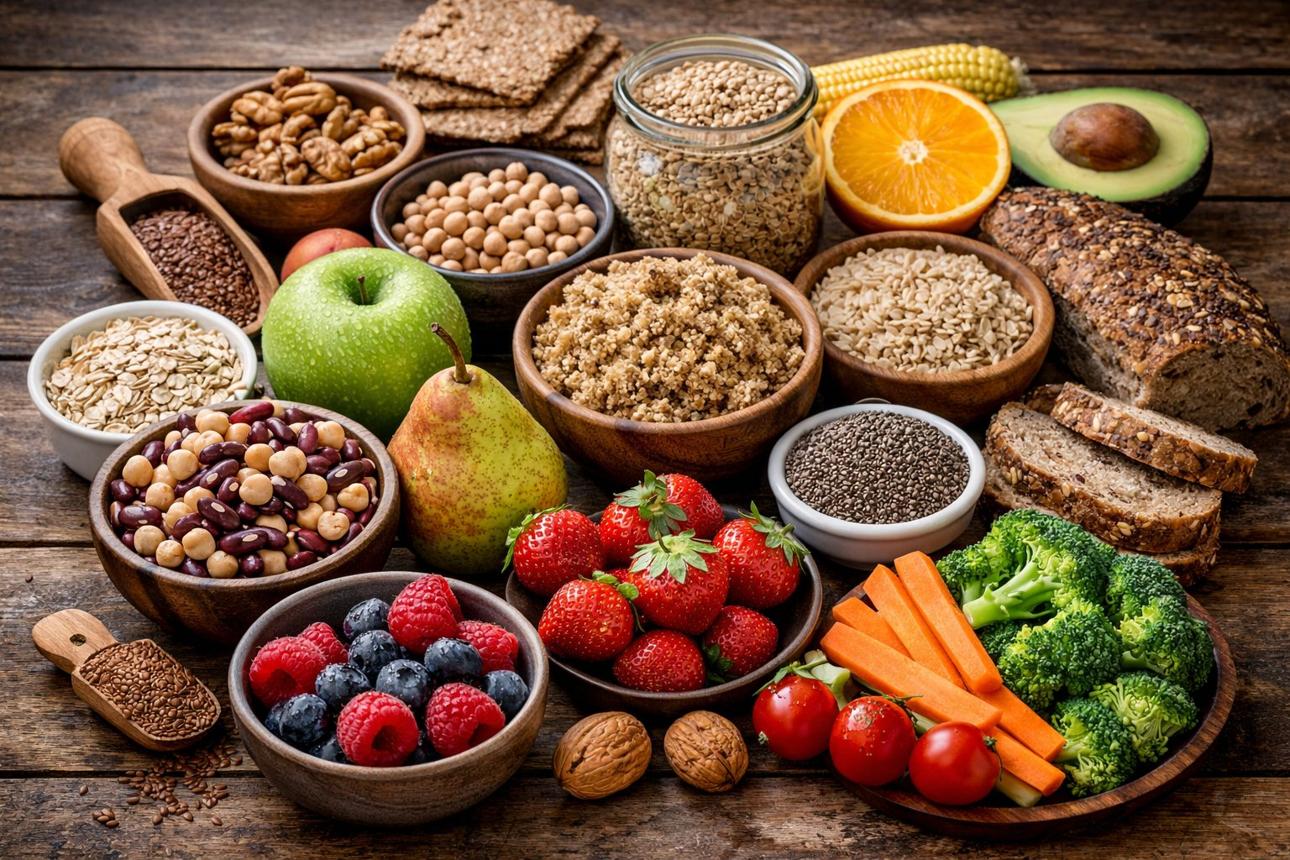


Fiber is one of the most valuable components of a healthy diet. It is found naturally in fruits, vegetables, legumes, whole grains, nuts, and seeds, yet many people still do not consume enough of it. Unlike protein, fat, or many other carbohydrates, fiber is not completely broken down and absorbed by the digestive system. Instead, different types of fiber travel through the gastrointestinal tract and perform important functions along the way. 🌱
From helping maintain regular bowel movements to feeding beneficial bacteria in the gut, fiber has a surprisingly wide range of effects. A fiber-rich eating pattern can also contribute to fullness after meals and support cardiovascular and metabolic health. Harvard Health, Cleveland Clinic, and other health resources emphasize whole plant foods as some of the best ways to increase fiber intake. (Harvard Health)
But fiber is not simply about avoiding constipation. Its relationship with the gut is much more interesting. Certain fibers are fermented by microorganisms in the large intestine, producing compounds that interact with the intestinal environment. This means that what you eat can influence not only how food moves through your digestive tract but also the environment in which your gut microbes live.
So, how exactly does fiber support digestion and gut health? Which foods contain it? How much do you need? And what is the best way to increase your intake without experiencing uncomfortable bloating?
Let’s explore the answers. 👇
🥦 What Exactly Is Dietary Fiber?
Dietary fiber is a type of carbohydrate naturally found in plant foods. The human digestive system cannot completely digest most dietary fiber in the same way it digests starches and sugars.
Instead, fiber can move through different sections of the digestive tract while performing different functions.
There are two traditional categories of fiber:
💧 Soluble Fiber
Soluble fiber dissolves in water and can form a gel-like substance. It is found in foods such as:
- Oats
- Barley
- Beans
- Lentils
- Apples
- Citrus fruits
- Some vegetables
- Chia seeds
- Flaxseeds
Soluble fiber can slow the movement of food through parts of the digestive tract and can also be fermented by gut microorganisms.
🌾 Insoluble Fiber
Insoluble fiber does not dissolve in water. It contributes bulk to stool and helps support normal movement through the digestive system.
Common sources include:
- Whole grains
- Wheat bran
- Nuts
- Seeds
- Vegetable skins
- Many vegetables
- Some fruits
The distinction between soluble and insoluble fiber is useful, but it is important to remember that foods usually contain mixtures of different fibers. You do not need to calculate exactly how much of each type you consume.
Instead, eating a wide variety of plant foods is a practical way to obtain different forms of fiber.
🚽 1. Fiber Helps Keep Your Digestive System Regular
One of the most familiar benefits of fiber is its role in bowel regularity.
When you eat adequate amounts of fiber, particularly fiber from whole plant foods, it can help create appropriate stool bulk. Insoluble fiber contributes physical structure, while water and other components of the diet influence stool softness and movement.
This can be particularly useful for people who struggle with occasional constipation.
However, fiber is not a magic solution that works independently of the rest of your lifestyle. Adequate fluids, physical activity, regular meals, and an overall balanced diet also contribute to healthy bowel function.
🌿 How does this work?
Imagine your digestive tract as a transportation system.
Food enters at one end, nutrients are absorbed along the way, and waste eventually leaves the body. Fiber provides material that helps support the movement and structure of intestinal contents.
A diet that contains very little fiber may produce less stool bulk. Increasing fiber gradually can help create a healthier digestive routine.
But there is an important point:
More fiber is not always better if you increase it too quickly.
A sudden jump from a low-fiber diet to a very high-fiber diet can result in:
- 💨 Gas
- 🎈 Bloating
- Abdominal discomfort
- Changes in bowel habits
For this reason, gradual increases are generally easier for the digestive system to tolerate.
🦠 2. Fiber Feeds Beneficial Gut Bacteria


One of the most fascinating relationships between fiber and health involves the gut microbiome.
The human digestive tract contains a huge community of microorganisms, including bacteria and other microbes. The large intestine is particularly rich in microorganisms.
Some types of dietary fiber reach the large intestine without being digested earlier in the digestive tract. There, certain microorganisms can ferment them.
This process can produce substances known as short-chain fatty acids (SCFAs), including acetate, propionate, and butyrate.
These compounds are part of the complex communication between diet, gut microorganisms, and the intestinal environment.
🌱 Fiber as a food source for microbes
Certain fermentable fibers can act as prebiotic substrates.
In simple terms:
You eat plant foods → certain fibers reach the colon → gut microbes use some of those fibers → fermentation produces metabolites.
This is one reason dietary diversity matters.
Different plant foods contain different combinations and structures of fiber. Eating a broad variety of vegetables, fruits, legumes, whole grains, nuts, and seeds can expose the gut microbiome to a wider range of substrates.
That does not mean that every individual food needs to be labeled a “superfood.”
The bigger picture is more important:
🥗 Eat a variety of plant foods regularly.
🧠 3. Fiber Connects Digestive Health With Overall Health
The digestive system does not operate in isolation.
Your gut interacts with your immune system, metabolism, nervous system, and many other biological processes. This is one reason researchers are increasingly interested in the relationship between diet, gut microorganisms, and overall health.
Fiber-rich foods also bring many other nutrients to the table.
For example:
🍎 Fruits provide fiber along with vitamins, minerals, and plant compounds.
🥦 Vegetables provide fiber plus a wide range of micronutrients and phytochemicals.
🫘 Legumes provide fiber and plant protein.
🌾 Whole grains provide fiber along with minerals and other nutrients.
🥜 Nuts and seeds provide fiber together with healthy fats, minerals, and other compounds.
This makes whole plant foods particularly valuable.
Harvard Health notes that foods naturally high in fiber can support digestive regularity and may also contribute to healthy cholesterol, blood pressure, body weight, and other aspects of health. (Harvard Health)
🍎 4. Fiber-Rich Foods You Can Eat Every Day
The easiest way to increase fiber is not necessarily to buy a fiber supplement.
Instead, start with ordinary foods.
Here are some excellent options.
🫘 Beans and Legumes
Beans, lentils, chickpeas, peas, and other legumes can be excellent sources of dietary fiber.
Examples include:
- Black beans
- Kidney beans
- Chickpeas
- Green lentils
- Red lentils
- Split peas
- Soybeans
Legumes are especially useful because they can provide both fiber and protein.
You can add them to soups, salads, curries, wraps, rice dishes, or vegetable meals.
🌾 Whole Grains
Whole grains contain more of the original grain structure than refined grains.
Examples include:
- Oats
- Barley
- Brown rice
- Whole-wheat products
- Bulgur
- Quinoa
- Sorghum
- Millet
Whole grains can be particularly convenient because they can replace refined grain products without completely changing your meals.
For example:
White rice → brown rice or another whole grain
Refined breakfast cereal → oatmeal
Refined bread → whole-grain bread
These small substitutions can add up over time.
🍓 Fruits
Fruit is another convenient way to increase fiber.
Good choices include:
- Apples
- Pears
- Raspberries
- Blackberries
- Oranges
- Bananas
- Guava
- Kiwi
- Strawberries
- Avocado
Whenever practical, eating whole fruit rather than drinking fruit juice preserves the fiber naturally present in the fruit.
The exact fiber content varies considerably from one fruit to another. For example, berries, pears, and certain other fruits can provide substantial amounts of fiber. (WebMD)
🥕 Vegetables
Vegetables are an essential part of a fiber-friendly diet.
Try:
🥦 Broccoli
🥕 Carrots
🥬 Spinach
🌱 Green peas
🥔 Potatoes with skin
🍠 Sweet potatoes
🌽 Corn
🥬 Brussels sprouts
🫑 Bell peppers
🥒 Other vegetables you enjoy
You do not need to eat the same vegetables every day.
In fact, variety can make a fiber-rich diet more enjoyable and nutritionally diverse.
🥜 5. Don’t Forget Nuts and Seeds


Nuts and seeds can provide useful amounts of fiber in relatively small portions.
Examples include:
- Chia seeds
- Flaxseeds
- Almonds
- Pistachios
- Peanuts
- Sunflower seeds
- Pumpkin seeds
Chia seeds are particularly fiber-rich. They can be added to oatmeal, yogurt, smoothies, or overnight oats.
🥣 Easy breakfast idea
Try combining:
Oats + berries + chia seeds + yogurt or milk + nuts
This creates a breakfast containing several sources of fiber and other nutrients.


An example of this type of breakfast is shown above. The combination of oats, berries, and chia seeds demonstrates how several plant-based fiber sources can easily fit into one meal.
💧 6. Why Water Matters When You Increase Fiber
One of the most important tips for increasing fiber is also one of the simplest:
Drink enough fluids. 💧
Some types of fiber interact with water in the digestive tract. If you suddenly increase your fiber intake while neglecting hydration, you may experience digestive discomfort.
Think of fiber and fluid as a team.
Increasing fiber gradually while maintaining adequate fluid intake can make the transition more comfortable.
However, there is no universal amount of water that every person must drink. Fluid requirements depend on factors such as climate, activity, diet, age, and individual circumstances.
Instead of obsessing over a single number, maintain regular fluid intake and pay attention to your body’s needs.
📊 7. How Much Fiber Do You Need?
Fiber requirements vary according to age, sex, and other factors.
For general adult guidance, commonly cited targets are around 25 grams per day for adult women and 38 grams per day for adult men, with lower targets generally applying after age 50. (Healthline)
Some health organizations and nutrition professionals simplify the goal to roughly 25–30+ grams per day, depending on the individual.
But the most important lesson is not to become obsessed with hitting an exact number overnight.
If you currently consume very little fiber, jumping immediately to a very high intake may make you uncomfortable.
Instead:
Week 1 🌱
Add one extra fruit or vegetable each day.
Week 2 🫘
Add beans, lentils, or chickpeas to one meal.
Week 3 🌾
Replace one refined grain with a whole-grain alternative.
Week 4 🥜
Add nuts or seeds to breakfast or snacks.
Small improvements can eventually become normal habits.
🍽️ 8. A Simple High-Fiber Day
Here’s an example of what a fiber-friendly day might look like.
🌅 Breakfast
Oatmeal topped with berries, chia seeds, and a handful of nuts.
Why it works:
Oats, berries, chia, and nuts provide different types of fiber.
☀️ Mid-Morning Snack
An apple or pear.
Tip:
Choose whole fruit rather than juice when possible.
🍛 Lunch
Lentil or chickpea curry with vegetables and a whole-grain roti or brown rice.
Why it works:
Legumes + vegetables + whole grains create a fiber-rich combination.
🍌 Afternoon Snack
Banana with a small serving of nuts.
🌙 Dinner
Vegetable soup with beans and whole grains, or a mixed vegetable meal with lentils.
💧 Throughout the Day
Drink fluids regularly according to your individual needs.
This is only an example. A healthy diet does not have to follow a particular menu.
🇮🇳 9. Fiber-Friendly Foods for Indian Meals
Fiber can be increased without abandoning familiar foods.
Indian cuisine already includes many naturally fiber-rich ingredients.
Consider:
🫘 Dal
Lentils are a convenient source of fiber and plant protein.
🌱 Chana
Chickpeas can be used in curries, salads, chaat, and other dishes.
🫘 Rajma
Kidney beans work well with rice, vegetables, and other whole-food ingredients.
🌾 Whole-Wheat Roti
Using whole-grain flour can provide more fiber than highly refined grain products.
🌾 Millets
Millets such as ragi, bajra, and jowar can add variety to grain choices.
🥬 Vegetables
Bhindi, cabbage, cauliflower, spinach, peas, carrots, beans, gourds, and many other vegetables can contribute fiber.
🍐 Fruits
Guava, pears, apples, oranges, bananas, and other whole fruits can be convenient snacks.
The goal is not to dramatically change traditional meals.
Instead, make gradual upgrades.
More dal + more vegetables + whole grains + whole fruit = a simple fiber-friendly pattern.
🎈 10. Why Does Fiber Sometimes Cause Bloating?
This is a common question.
Fiber can be fermented by gut microorganisms. During fermentation, gases can be produced. If someone suddenly consumes much more fiber than usual, the digestive system may need time to adapt.
This can result in:
- Gas
- Bloating
- Abdominal fullness
- Temporary changes in bowel habits
This does not necessarily mean fiber is bad for you.
It may simply mean the increase happened too quickly.
Try these strategies:
✅ Increase fiber gradually.
✅ Spread fiber throughout the day.
✅ Drink adequate fluids.
✅ Introduce beans and legumes in manageable portions.
✅ Choose a variety of fiber sources rather than relying heavily on one food.
If severe or persistent digestive symptoms occur, however, it is important to discuss them with a healthcare professional rather than assuming that fiber is the cause.
🌱 11. Fiber Supplements vs. Fiber From Food
Fiber supplements can be useful in some circumstances, but whole foods are generally a valuable starting point.
Why?
Because a whole plant food does more than provide fiber.
For example, an apple contains fiber along with water and various micronutrients and plant compounds. Lentils provide fiber along with protein and minerals. Nuts and seeds provide fiber together with healthy fats and other nutrients.
Harvard Health similarly recommends obtaining fiber from foods when possible because high-fiber foods provide a broader range of nutrients. (Harvard Health)
That does not mean supplements are always inappropriate. Some people may benefit from specific products under professional guidance.
If you are considering a fiber supplement because of ongoing constipation, diarrhea, or another digestive issue, it is sensible to discuss the choice with a healthcare professional.
🥗 12. Fiber and Feeling Full
Another useful feature of fiber is its relationship with satiety.
High-fiber foods can take longer to eat and digest and may help you feel satisfied after meals. Foods such as beans, vegetables, whole grains, fruits, nuts, and seeds can therefore be useful components of a balanced eating pattern.
This can make it easier to build satisfying meals without relying heavily on highly processed snacks.
For example:
Low-fiber snack
A highly refined snack may be easy to eat quickly and may provide relatively little fiber.
Higher-fiber alternative
Fruit + nuts can provide fiber along with other nutrients.
The point is not that every low-fiber food is unhealthy.
Rather, regularly choosing a variety of minimally processed plant foods can improve the overall nutritional quality of your diet.
❤️ 13. Fiber and Heart Health
Fiber’s benefits extend beyond the digestive system.
Certain soluble fibers can influence cholesterol metabolism, and fiber-rich eating patterns have been associated with cardiovascular benefits.
But again, it is important to look at the entire food rather than fiber alone.
A diet based around:
🥦 Vegetables
🍎 Fruits
🫘 Legumes
🌾 Whole grains
🥜 Nuts
🌱 Seeds
provides far more than fiber.
These foods collectively supply nutrients and plant compounds that contribute to an overall healthy dietary pattern. (Harvard Health)
🩸 14. Fiber and Blood Sugar
Some forms of fiber can slow digestion and influence how quickly carbohydrates are absorbed.
This is one reason meals containing fiber-rich foods can have different effects on blood glucose compared with meals dominated by rapidly digested refined carbohydrates.
For example, pairing whole grains or legumes with vegetables and protein can create a more balanced meal.
However, people with diabetes or other metabolic conditions should follow individualized dietary advice from their healthcare team rather than relying on general fiber recommendations alone.
🛒 15. How to Buy More Fiber at the Grocery Store
Increasing fiber starts before the food reaches your plate.
Try making a simple shopping list.
Produce section 🍎
Buy several different fruits and vegetables.
Grain section 🌾
Look for oats, barley, brown rice, whole-grain bread, or other whole grains.
Legume section 🫘
Keep lentils, chickpeas, peas, and beans available.
Nuts and seeds 🥜
Choose unsalted or minimally processed varieties when appropriate.
Frozen foods ❄️
Frozen vegetables and berries can also be practical options. They can make it easier to keep nutritious foods available even when fresh produce is inconvenient.
🔄 16. Easy Fiber Swaps
You don’t need a completely new diet.
Try these simple changes:
| Instead of | Try |
|---|---|
| Fruit juice | 🍎 Whole fruit |
| White bread | 🌾 Whole-grain bread |
| Refined cereal | 🥣 Oatmeal |
| Meat-only curry | 🫘 Add lentils or beans |
| Chips | 🥕 Vegetables with hummus |
| Refined rice every meal | 🌾 Mix in whole grains |
| Sweet snack | 🍓 Fruit + nuts |
| Low-fiber breakfast | 🥣 Oats + fruit + seeds |
Small substitutions are often easier to maintain than dramatic dietary changes.
🌈 17. Variety Is the Secret
One of the biggest mistakes people make when increasing fiber is relying on a single “superfood.”
For example, you do not need to consume huge quantities of chia seeds every day.
Instead, think about fiber diversity.
One day you might eat:
🌾 Oats
🍌 Banana
🫘 Lentils
🥦 Broccoli
🍎 Apple
🥜 Almonds
Another day:
🌾 Barley
🫘 Chickpeas
🥕 Carrots
🍊 Orange
🌱 Flaxseed
🥬 Leafy greens
Different plants contain different fibers and other compounds. A diverse diet is therefore a more practical strategy than searching for one perfect food.
🚶 18. Fiber Is Only One Part of Digestive Health
Fiber is important, but gut health involves much more.
A healthy digestive lifestyle can include:
🥗 Balanced nutrition
Eat a variety of minimally processed foods.
💧 Adequate hydration
Drink fluids regularly.
🚶 Physical activity
Regular movement supports overall health and can complement healthy digestive habits.
😴 Quality sleep
Sleep is an important part of overall wellness.
🧘 Stress management
Stress can influence how people experience digestive symptoms.
🍽️ Regular eating habits
Eating mindfully and giving yourself time to eat can also support a healthier relationship with food.
The goal is not to find one dietary ingredient that solves every digestive problem.
Instead, build a lifestyle that supports your body from multiple directions.
⚠️ 19. When Should You Talk to a Doctor?
Most people can gradually increase fiber through ordinary foods, but persistent digestive symptoms deserve attention.
Speak with a healthcare professional if you experience ongoing:
- Severe abdominal pain
- Persistent constipation
- Persistent diarrhea
- Blood in the stool
- Unexplained weight loss
- Repeated vomiting
- Significant or worsening bloating
- Major changes in bowel habits
These symptoms can have many possible causes and should not automatically be attributed to insufficient fiber.
People with certain gastrointestinal conditions may also need individualized dietary advice. If you have a diagnosed digestive disorder or are taking medications that affect digestion, consult your healthcare professional before making major dietary changes.
📝 20. A Practical Fiber Checklist
Want to make fiber a regular part of your diet?
Use this simple checklist:
☐ Eat at least one fruit each day. 🍎
☐ Include vegetables with meals. 🥦
☐ Eat beans, lentils, or chickpeas regularly. 🫘
☐ Choose whole grains more often. 🌾
☐ Add nuts or seeds to appropriate meals. 🥜
☐ Drink adequate fluids. 💧
☐ Increase fiber gradually rather than suddenly. 🌱
☐ Eat a variety of plant foods. 🌈
☐ Choose whole fruit instead of juice when practical. 🍊
☐ Pay attention to how your body responds. ❤️
🥣 21. A Simple Fiber-Rich Breakfast Recipe
Berry-Chia Oatmeal 🍓🌾


Ingredients
- ½–1 cup oats
- 1 tablespoon chia seeds
- A handful of berries
- 1 small banana or sliced apple
- Milk or unsweetened alternative
- A small handful of nuts
- Cinnamon, optional
Preparation
Cook the oats with your preferred liquid. Stir in chia seeds and top with berries, fruit, and nuts.
Why it works
This simple breakfast combines several plant foods in one bowl. Oats and chia provide fiber, while berries, fruit, and nuts contribute additional nutrients.
An overnight-oats version can be prepared in advance for busy mornings. UCLA Health also features overnight oats with chia and berries as a simple meal option.
🌿 22. The Long-Term Approach to Better Gut Health
Improving gut health should not be treated as a short-term “detox.”
Your digestive system works every day, so the most useful approach is to create habits that you can maintain for months and years.
Instead of thinking:
“I need to eat a huge amount of fiber today.”
Think:
“How can I include more plant foods in my meals consistently?”
That change in mindset makes healthy eating much easier.
Maybe you add berries to breakfast.
Maybe you eat dal with lunch.
Maybe you choose an apple instead of juice.
Maybe you add vegetables to dinner.
Maybe you replace refined grains with whole grains a few times each week.
None of these changes is revolutionary by itself.
Together, however, they can create a much more fiber-rich dietary pattern.
🌟 Conclusion: Make Fiber Your Gut’s Everyday Friend
Fiber is far more than a nutrient associated with avoiding constipation. It is an important component of a healthy dietary pattern that supports digestion, bowel regularity, and the gut microbiome. Certain fibers reach the large intestine and are fermented by gut microorganisms, producing metabolites that contribute to the complex relationship between diet and intestinal health.
The best sources are not mysterious or expensive. They are everyday foods: beans, lentils, fruits, vegetables, whole grains, nuts, and seeds. (Harvard Health)
The key is consistency and variety. 🌱
Increase fiber gradually. Drink adequate fluids. Include different plant foods throughout the week. Choose whole fruits over juices when practical, experiment with whole grains, and add legumes to meals whenever you can.
Most importantly, don’t try to transform your diet overnight.
🥦 More vegetables
🍎 More whole fruits
🫘 More legumes
🌾 More whole grains
🥜 More nuts and seeds
💧 Adequate fluids
🚶 A generally active lifestyle
These simple habits can work together to create a more digestion-friendly way of eating.
A healthier gut does not require perfection—it requires consistent, nourishing choices. 🌿💚
This article is for general educational purposes and is not a substitute for individualized medical or nutritional advice.