
Category: Gut Health · Immunology · Preventive Medicine
Imagine if a routine blood test could help doctors recognize the early warning signs of a chronic intestinal disease years before digestive symptoms appear. This possibility is attracting scientific interest in the study of inflammatory bowel disease (IBD), a group of conditions that cause long-lasting inflammation in the digestive tract.
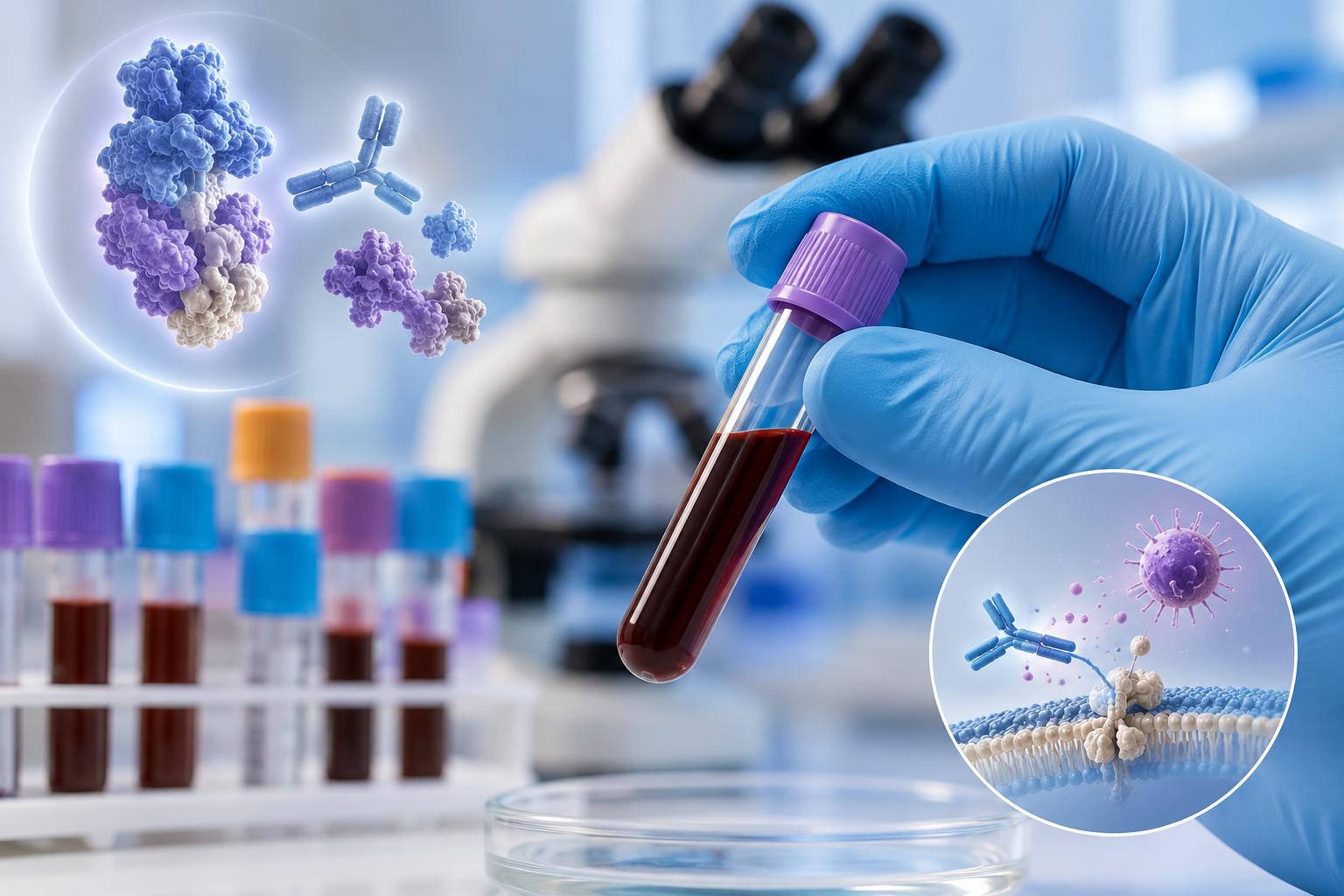
Researchers are investigating whether specific antibody patterns in blood can reveal changes associated with IBD long before a person receives a formal diagnosis. If future studies confirm the accuracy of these signals, blood biomarkers could help doctors identify people who may benefit from closer monitoring and additional testing.
However, an early biological signal is not the same as a reliable prediction. Scientists still need to determine how well these markers work across different populations and whether they can improve patient outcomes.
Understanding Inflammatory Bowel Disease


Inflammatory bowel disease is not a single illness. It mainly includes two chronic conditions: Crohn’s disease and ulcerative colitis.
Crohn’s disease can affect any part of the digestive tract, from the mouth to the anus, although the small intestine and colon are common sites. Ulcerative colitis primarily affects the large intestine and rectum, causing inflammation of the inner lining.
Both conditions involve complex interactions among the immune system, gut microbiome, genetic susceptibility and environmental factors. Symptoms may include persistent diarrhea, abdominal pain, blood in the stool, fatigue, unintended weight loss and reduced appetite.
IBD is different from irritable bowel syndrome (IBS). IBS can cause abdominal discomfort and changes in bowel habits, but it does not cause the characteristic intestinal inflammation and tissue damage associated with IBD.
One important challenge is that IBD may develop gradually. Biological changes can occur before symptoms become obvious, creating a potential opportunity for researchers to study early warning signals.
Gut
+1
What Did the New Blood-Test Research Discover?

A study published in Gut in July 2026 investigated how immune-system antibody patterns change in the years before IBD diagnosis. Related findings were presented at UEG Week 2026 in October.
The research team examined 2,000 blood serum samples from 500 individuals. The group included 200 people who later developed Crohn’s disease, 200 who developed ulcerative colitis and 100 healthy comparison participants.
The researchers examined samples collected at diagnosis and approximately two, four and ten years beforehand. They used a technique called phage-display immunoprecipitation sequencing, or PhIP-Seq, to study antibody responses against roughly 357,000 peptides associated with microbes, viruses, food and the immune system.
Antibodies are proteins made by the immune system. They recognize particular targets, known as antigens, and can reveal information about previous or ongoing immune activity.
The team identified different patterns of antibody responses in people who later developed IBD compared with healthy controls. Some of these patterns were detectable as far as a decade before diagnosis.
This is significant because it suggests that IBD may leave measurable traces of immune-system changes well before a person seeks medical attention for digestive symptoms. However, the researchers identified patterns associated with future disease, not a ready-to-use clinical blood test.
How Could Antibodies Reveal Early Disease Risk?
The immune system constantly responds to microorganisms, environmental exposures and substances encountered in everyday life. Researchers believe that studying these responses over time may reveal clues about the early biological processes associated with chronic inflammatory diseases.
The study identified different antibody signatures associated with Crohn’s disease and ulcerative colitis.
In people who later developed Crohn’s disease, researchers observed stronger antibody responses to herpesviruses, including Epstein–Barr virus, and to bacterial flagellin. Flagellin is a protein that helps certain bacteria move. Some of these responses were particularly associated with people who later developed complicated disease or inflammation affecting the ileum, the final section of the small intestine.
In people who later developed ulcerative colitis, the researchers found a different combination of antimicrobial, antiviral and self-directed antibody responses.
These findings suggest that the immune system may follow different biological trajectories before the two conditions become clinically apparent.
Importantly, the presence of an antibody does not establish that a particular virus or bacterium caused IBD. Antibodies can reflect previous exposure, immune interactions or other biological processes. More research is needed to understand which changes contribute to disease development and which simply accompany it.
How Accurate Was the Prediction Model?
One of the most interesting aspects of the research was the use of machine learning to analyze complex antibody patterns.
The researchers reported the following results for distinguishing people who later developed IBD from healthy controls:
Crohn’s disease
0.90
Area under the ROC curve (AUC): 0.90
Ulcerative colitis
0.84
Area under the ROC curve (AUC): 0.84
Complicated Crohn’s disease
0.85
AUC for distinguishing future complicated from less complicated disease
Source: Research published in Gut and findings presented at UEG Week 2026
An AUC measures how well a model ranks people with a condition above people without it. A value of 0.5 indicates performance equivalent to chance, while 1.0 represents perfect discrimination.
These results are promising, but an AUC of 0.90 does not mean that 90% of people tested will receive a correct diagnosis. It does not, by itself, tell us how many people who test positive will actually develop IBD.
That depends on other factors, including how common the disease is in the population being screened, the threshold used to classify risk, and the test’s sensitivity and specificity. A model that performs well in a selected research cohort may perform differently when applied to the general public.
The next step is to test the model in independent populations and determine whether it remains accurate in different age groups, ethnic backgrounds and clinical settings.
Could Early Biomarkers Help Doctors Identify People Who Need Further Testing?

The potential benefit of early blood biomarkers is not necessarily to diagnose IBD immediately. Instead, they could help doctors identify people whose risk deserves further investigation.
If future research validates the antibody signatures, a possible clinical pathway could look like this:
Blood sample analysis
Researchers or clinicians measure selected antibody patterns using a validated test.
Risk assessment
A validated algorithm combines biomarker results with relevant clinical information to estimate whether further investigation is warranted.
Clinical evaluation
A doctor assesses symptoms, medical history and other risk factors before deciding whether additional tests are appropriate.
Confirmatory testing, if indicated
Depending on the clinical picture, evaluation may include stool tests, blood tests, imaging or endoscopy with biopsies.
Illustrative future pathway, not an established screening protocol.
This approach could be particularly useful if researchers identify a reliable way to distinguish people who are likely to develop IBD from those who have similar antibody patterns but never develop the disease.
It might also help doctors investigate disease risk among people with a strong family history of IBD. However, family history or an experimental antibody signature alone does not establish that someone will develop the condition.
What Are the Limitations of the Research?
Although the findings are promising, several scientific and practical questions remain unanswered.
The study population needs broader representation. The research used samples from a US military cohort. Scientists must establish whether the same patterns can predict disease in more diverse populations, including people in India and other regions with different genetic backgrounds, environmental exposures and gut microbiomes.
Prediction is not prevention. Detecting a possible warning signal does not automatically reveal how to prevent the disease. Researchers must determine whether acting on the information can delay disease onset, reduce intestinal damage or improve long-term health.
False-positive results could cause harm. If a future test labels healthy people as high-risk, it could cause anxiety, unnecessary investigations and additional healthcare costs. Conversely, false-negative results could provide misleading reassurance.
The testing process must become practical. The original research examined a very large number of antibody targets. A routine clinical test would ideally use a smaller, reproducible and affordable panel of biomarkers.
Clinical benefits must be demonstrated. Researchers need to show that testing leads to better decisions and outcomes compared with existing clinical assessments. The authors themselves identify validation, affordability and evidence of improved outcomes as priorities for future work.
What Does This Mean for Gut Health and Preventive Medicine?
The study supports a broader shift in medical research: understanding disease before it becomes clinically apparent.
Traditional diagnostic approaches often focus on symptoms, measurable inflammation and tissue damage. Biomarker research aims to discover whether changes in the immune system can provide useful information earlier in that process.
For IBD, this could eventually create opportunities to investigate disease mechanisms before significant intestinal injury develops. It could also improve understanding of why some people experience more complicated disease than others.
Nevertheless, early detection is useful only when it leads to meaningful action. Researchers must establish which people would benefit from monitoring, what follow-up tests should be used, and whether any intervention during the early phase can improve outcomes.
For now, people should not seek experimental antibody profiling as a substitute for standard medical assessment. Anyone experiencing persistent diarrhea, blood in the stool, unexplained weight loss or ongoing abdominal pain should consult a healthcare professional rather than wait for a future predictive test.
Conclusion
Can a blood test predict inflammatory bowel disease years before diagnosis? Early research suggests that antibody patterns may eventually help identify people at increased risk of Crohn’s disease or ulcerative colitis up to a decade before diagnosis.
The 2026 study provides evidence that measurable immune changes precede clinical recognition of IBD and that machine-learning models can distinguish future disease cases from healthy controls in the research cohort.
However, the findings do not yet establish a routine predictive test, prove that every person with these immune patterns will develop IBD, or demonstrate that screening healthy people improves outcomes.
The next stage of research must validate the findings across diverse populations and determine whether early identification can guide effective clinical care. If those steps succeed, antibody-based testing could become a valuable tool in preventive gastroenterology, helping doctors recognize risk earlier and investigate disease before more serious symptoms emerge.