
Introduction: A Green Leaf with a Deep Cultural Heritage 🇮🇳
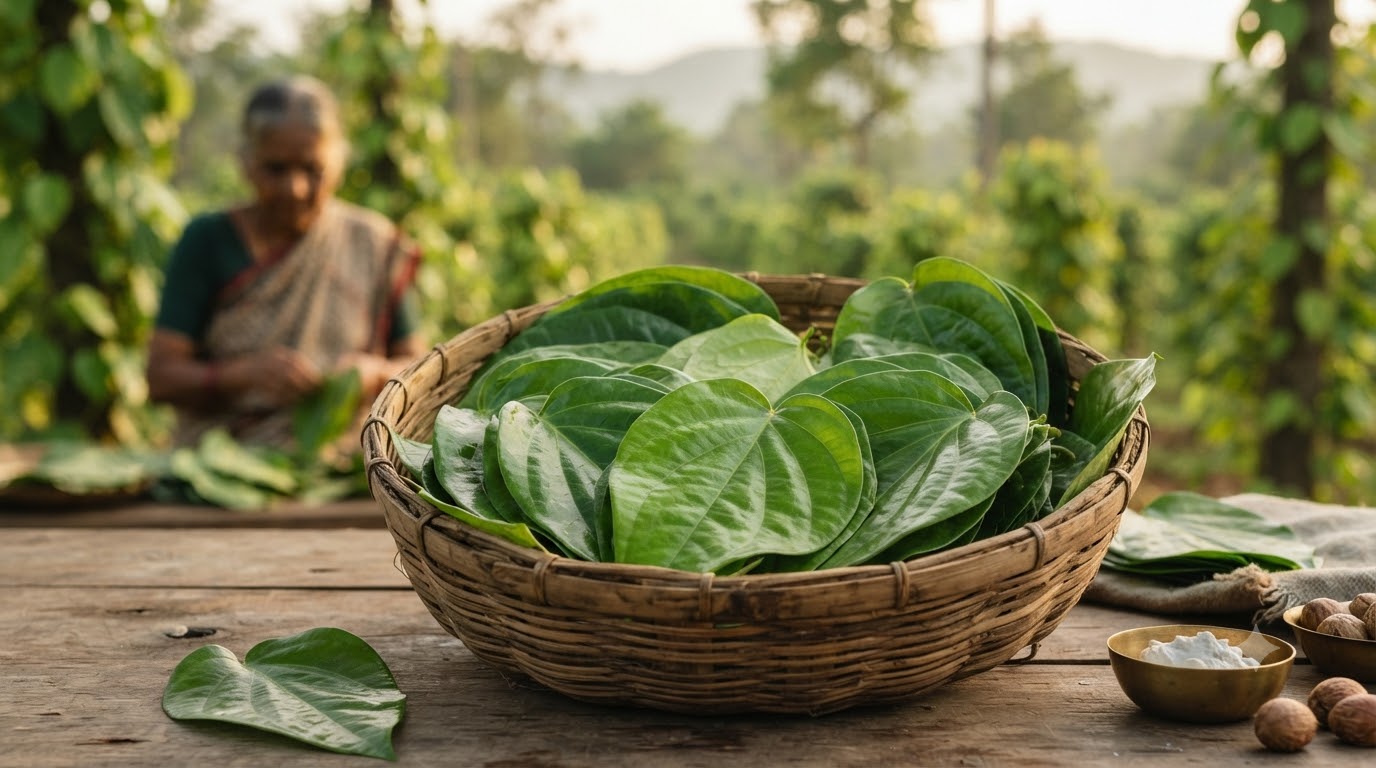
Mysore Betel Leaf, traditionally known as Mysore Veelyadele or Mysore Chigurele, is one of Karnataka’s distinctive traditional agricultural products. It is a regional variety of Piper betle, the climbing plant commonly known as betel vine. The leaf is recognized for its characteristic heart-shaped form, smooth texture, pungent taste, and aromatic qualities.
Mysore Betel Leaf is particularly interesting because it sits at the intersection of food, agriculture, cultural heritage, traditional practices, and modern phytochemical research. It has traditionally been offered during ceremonies and used in preparations such as paan, while researchers have studied Piper betle for compounds with antioxidant and antimicrobial activity.
The Mysuru district administration describes Mysuru Betal Leaf as a traditional specialty of the region and notes that its cultivation was once spread across substantial areas around Mysuru. The district’s account also highlights its distinctive taste and its continuing role in religious and cultural ceremonies. (Mysore District Website)


🌱 What Is Mysore Betel Leaf?
Mysore Betel Leaf comes from the species Piper betle L., a member of the Piperaceae family, which also includes black pepper. The Indian Flora database maintained by the Indian Institute of Science identifies Piper betle as a climbing shrub cultivated for its edible leaves. (India Flora Online)
Unlike many vegetables that are eaten in substantial quantities, betel leaf is usually consumed in relatively small amounts. Its importance therefore lies less in supplying large quantities of calories, protein, or carbohydrates and more in its aroma, culinary role, traditional significance, and bioactive plant compounds.
The leaf is generally:
- 💚 Green and glossy
- ❤️ Heart-shaped
- 🌿 Aromatic
- 🌶️ Naturally pungent or peppery
- 🍃 Relatively delicate
- 🌱 Produced by a climbing vine
Mysore Betel Leaf is traditionally distinguished from other betel varieties by its smooth texture and characteristic hot or pungent flavor. Historical descriptions also associate the variety with the Mysuru region’s soil and climate. (Wikipedia)
🏛️ The Heritage of Mysore Betel Leaf
Mysore Betel Leaf is more than an agricultural crop. It represents an important part of the cultural landscape of Mysuru.
The Mysuru district government notes that cultivation of the leaf once covered approximately 100 acres in a stretch from Poorniah Choultry in Old Agrahara toward the Vidyaranyapuram junction, with cultivation also extending into neighboring areas. The leaf was traditionally valued for its distinctive taste and was used particularly in ceremonial contexts. (Mysore District Website)
The crop has also been associated historically with royal patronage and traditional gardens around Mysuru.
The names Mysore Chigurele and Mysore Veelyadele are commonly associated with this regional identity.
The geographical identity of the product is significant because its characteristics are connected with a particular production region rather than simply with the species Piper betle as a whole.
🏷️ GI Recognition and Regional Identity
Mysore Betel Leaf has been associated with India’s Geographical Indication system. APEDA’s Karnataka GI listing identifies Mysore Betel Leaf with the Department of Horticulture, Government of Karnataka, as the registered proprietor, with the GI application filed in 2005 and certificate issued in 2006. (APEDA)
A GI designation is important because it connects a product’s name and identity with a particular geographical region and traditional production heritage.
For consumers, this regional identity can help distinguish a recognized traditional product from generic betel leaves sold elsewhere.
🍃 Traditional Food Uses of Mysore Betel Leaf
Betel leaves have been part of South Asian culinary and cultural practices for centuries.
One of the best-known uses is paan, where a fresh leaf is folded around different ingredients. Depending on the tradition, these may include spices, coconut, fennel, cardamom, sweet ingredients, areca nut, lime, or tobacco.
However, it is extremely important to distinguish the fresh leaf itself from the complete betel-quid preparation.
A fresh betel leaf is a plant food. A preparation containing areca nut and tobacco has a very different health profile.
The Indian Institute of Science’s Flora database notes that Piper betle is cultivated for edible leaves and traditionally used with ingredients including areca nut, lime, tobacco, and others. (India Flora Online)
🙏 Betel Leaf in Indian Ceremonies
Betel leaves have long had symbolic importance in Indian traditions.
In many communities, a pair or bundle of betel leaves is presented during:
- 💍 Weddings
- 🏠 Housewarming ceremonies
- 👶 Naming ceremonies
- 🛕 Religious rituals
- 🎉 Festivals
- 🤝 Traditional hospitality
- 🙏 Expressions of respect
The Mysuru district administration specifically notes that changing food and cultural habits have reduced the everyday prominence of betel-leaf chewing in the region, while the leaf remains important in religious ceremonies. (Mysore District Website)
This cultural role makes Mysore Betel Leaf an example of how food plants can have significance extending beyond nutrition.
🧪 What Makes Betel Leaf Scientifically Interesting?
The nutritional value of a food cannot always be measured simply by its calories, protein, carbohydrate, or fat content.
Plants also contain phytochemicals, naturally occurring compounds that may interact with biological systems.
Researchers studying Piper betle have investigated compounds belonging to several groups, including:
🌿 Phenolic compounds
Phenolic compounds are widely studied in plant science because many demonstrate antioxidant activity in laboratory experiments.
🍃 Flavonoids
Flavonoids are another important group of plant phytochemicals. Their biological activity has made them subjects of research in nutrition and pharmacology.
🌸 Volatile compounds
Volatile aromatic substances contribute to the distinctive smell and taste of betel leaf.
🧪 Essential-oil components
The essential-oil fraction of Piper betle has been investigated for antimicrobial and other biological activities.
The Indian Medicinal Plants, Phytochemistry And Therapeutics database lists Piper betle among medicinal plants represented in traditional Indian formulations, illustrating the longstanding interest in the plant. (IMSC)
🔬 Antioxidant Research on Betel Leaf
One of the most frequently discussed research areas surrounding betel leaf is antioxidant activity.
Antioxidants are substances capable of interacting with reactive molecules. In laboratory research, extracts from plants are often tested to determine their ability to neutralize certain reactive compounds.
Betel leaf has attracted attention because of its phenolic and other phytochemical constituents.
However, there is an important scientific distinction:
Antioxidant activity in a laboratory extract does not automatically mean that eating the plant will prevent a disease in humans.
A compound may behave differently after digestion. Its absorption, metabolism, concentration in tissues, and interaction with other nutrients can all influence its biological effects.
Therefore, research findings involving Piper betle extracts should be interpreted as evidence of scientific potential, rather than proof of a specific medical benefit.
🦠 Antimicrobial Potential
Another major research area is the possible antimicrobial activity of Piper betle.
Laboratory researchers have examined betel-leaf extracts and essential oils against different microorganisms. Such work is potentially relevant to:
- 🧫 Food preservation
- 🧪 Natural antimicrobial research
- 🌿 Plant-based compounds
- 🔬 Pharmaceutical research
- 🧴 Natural-product development
The scientific interest comes from the fact that plants often produce chemical compounds as part of their own biological defense systems.
Nevertheless, laboratory antimicrobial activity should not be interpreted as evidence that chewing or eating betel leaves can cure an infection.
That distinction is essential when discussing traditional plants in a health context.
🧬 Phenolic Compounds and Modern Nutrition Research
Modern nutritional science increasingly recognizes that plant foods contain numerous compounds that are not classified simply as vitamins or minerals.
Phenolic compounds are particularly interesting because they can participate in chemical reactions involving oxidation.
Betel leaf has therefore become a subject of research investigating:
- Oxidative processes
- Free-radical scavenging
- Plant defense chemistry
- Microbial interactions
- Cellular research
- Food science applications
Future research could help determine whether specific compounds found in Mysore Betel Leaf have meaningful nutritional effects when consumed in realistic dietary quantities.
🥬 Is Mysore Betel Leaf a Nutrient-Rich Food?
The answer depends on what is meant by “nutrient-rich.”
Mysore Betel Leaf contains plant nutrients and phytochemicals, but it is normally consumed in small quantities. Therefore, it should not be considered a major source of calories, protein, or dietary fiber in the same way as legumes, whole grains, vegetables, or fruits.
Its potential nutritional interest lies primarily in its bioactive plant compounds.
This is an important point because internet discussions sometimes describe betel leaf as a cure-all because of its phytochemical composition. Scientific evidence does not justify such broad claims.
A balanced interpretation is that Mysore Betel Leaf is a traditional edible plant containing biologically interesting compounds that remain an active area of research.
🌿 Cultivation of Mysore Betel Leaf
Betel vine is a tropical climbing plant that requires appropriate environmental conditions.
The plant is commonly grown using supports that allow the vines to climb. Shade and moisture management are important because the plant is sensitive to environmental conditions.


Modern cultivation research also demonstrates that disease management remains important. A recent study examined powdery mildew affecting Piper betle in parts of Karnataka and reported disease observations from locations in Mysuru, Mandya, and Bengaluru South. (ScienceDirect)
This illustrates an important reality: preserving a traditional crop requires not only cultural appreciation but also agricultural research and farmer support.
🌦️ Climate and Soil
The quality and characteristics of agricultural products can be influenced by:
- 🌧️ Rainfall
- 🌡️ Temperature
- 🌱 Soil characteristics
- 💧 Irrigation
- ☀️ Light exposure
- 🌿 Cultivation practices
- 🧬 Variety
- 🧺 Harvesting stage
- 📦 Post-harvest handling
Historical descriptions of Mysore Betel Leaf have associated its distinctive characteristics with the local environment.
The Mysuru district government describes the region’s traditional cultivation and the distinctive taste associated with the crop. (Mysore District Website)
🧺 Harvesting and Freshness
Betel leaves are highly perishable compared with many dry agricultural products.
Fresh leaves need careful handling after harvesting because physical damage, dehydration, temperature changes, and microbial contamination can affect quality.
This makes the post-harvest chain especially important.
A leaf intended for culinary use should be:
- Fresh
- Clean
- Free from visible fungal growth
- Properly stored
- Washed appropriately before use
- Sourced from a reliable producer or seller
Because the leaves are commonly eaten fresh, hygiene and handling deserve as much attention as nutritional composition.
🔎 Mysore Betel Leaf and Modern Research
Scientific research on Piper betle is broader than research specifically on Mysore Betel Leaf.
This distinction matters.
A study performed on an extract from one Piper betle cultivar cannot automatically be assumed to describe the chemical composition or health effects of every regional variety.
Different varieties may differ in:
- Essential-oil composition
- Phenolic concentration
- Flavonoid profile
- Aroma
- Taste
- Leaf thickness
- Growing conditions
For that reason, future studies specifically examining Mysore Veelyadele could provide valuable information.
🧪 What Researchers Could Study Next
There are several promising directions for future scientific research.
1. Detailed nutritional profiling
Researchers could measure vitamins, minerals, fiber, moisture, and other nutritional components using standardized analytical methods.
2. Phytochemical fingerprinting
Advanced analytical techniques could identify the specific compounds responsible for the variety’s characteristic aroma and taste.
3. Cultivar comparison
Researchers could compare Mysore Betel Leaf with other Indian varieties of Piper betle.
4. Human nutrition studies
Controlled studies could investigate how the compounds in fresh leaves are absorbed and metabolized.
5. Food-safety research
Because the leaves are frequently consumed fresh, researchers could examine microbial contamination, storage conditions, washing practices, and shelf life.
6. Agricultural sustainability
Research could investigate disease-resistant planting material, water management, shade systems, and environmentally sustainable cultivation.
🏙️ Urbanization and the Future of Mysore Betel Leaf
Preserving traditional agricultural products can be challenging when agricultural land is converted to other uses.
A 2022 study examining Mysore Betel Leaf cultivation reported that urbanization had reduced traditional cultivation areas around Mysuru. (ResearchGate)
More recently, a 2026 report from Star of Mysore described continued cultivation and a dedicated wholesale market for Mysore Veelyadele in Udbur, while also highlighting pressures such as labor shortages and rising labor costs. (Star of Mysore)
These developments demonstrate that traditional crops can survive when farming communities maintain cultivation knowledge and market connections.
🧑🌾 Why Farmers Matter
Behind every traditional GI-associated food is a network of farmers, workers, traders, and consumers.
For a crop like Mysore Betel Leaf, farmers must manage:
🌱 Planting
💧 Irrigation
🌿 Shade
🦠 Disease prevention
🧺 Harvesting
📦 Storage
🚚 Transportation
💰 Market demand
The economic sustainability of the crop therefore matters as much as its cultural identity.
Supporting traditional agricultural systems can help preserve both biodiversity and local knowledge.
🍽️ How Can Fresh Betel Leaf Be Used?
Fresh betel leaf can be used traditionally as a wrapper or aromatic component.
Its strong flavor means that only a small quantity may be needed to contribute aroma.
Some culinary possibilities include:
- 🌿 Fresh leaf wraps
- 🥥 Traditional coconut-based fillings
- 🌰 Spice combinations
- 🍋 Aromatic food preparations
- 🍃 Decorative culinary presentation
- 🍬 Traditional sweet paan preparations
The exact ingredients used with the leaf vary significantly by region and tradition.
⚠️ An Important Health Distinction: Leaf vs Betel Quid
This is perhaps the most important health message when discussing betel leaf.
Fresh Piper betle leaf should not be treated as equivalent to a betel quid containing areca nut and tobacco.
Betel quid formulations can contain several ingredients, including areca nut and tobacco.
Areca nut consumption is associated with serious health risks, including oral cancer, and tobacco introduces additional well-established health risks.
Therefore, research investigating antioxidant or antimicrobial compounds in Piper betle should not be interpreted as evidence that tobacco-containing or areca-nut-containing paan is healthy.
This distinction allows us to appreciate the traditional food plant while still acknowledging the health risks associated with certain preparations.
🩺 Can Mysore Betel Leaf Prevent or Treat Disease?
There is currently insufficient evidence to describe Mysore Betel Leaf as a proven treatment for diseases.
Laboratory research into Piper betle has generated interesting findings, but laboratory evidence is not equivalent to clinical evidence.
For example:
Laboratory antioxidant activity → interesting scientific observation
does not automatically mean:
Eating betel leaf → prevents cancer or cardiovascular disease.
Similarly:
Laboratory antimicrobial activity → potential research application
does not automatically mean:
Betel leaf → treats bacterial infection.
This distinction is particularly important for health-focused food content.
📊 Understanding the Evidence
When reading research about traditional foods, it helps to classify evidence into different levels.
🧫 Laboratory studies
These examine extracts, isolated compounds, cells, or microorganisms.
They can identify interesting biological activity but cannot by themselves establish a health benefit in humans.
🐁 Animal studies
Animal experiments can provide additional information about biological mechanisms and safety, but animal findings cannot automatically be transferred to humans.
👨👩👧 Human observational studies
These can identify associations but may be affected by lifestyle, diet, and other factors.
🧑⚕️ Clinical trials
Well-designed clinical trials provide stronger evidence about whether an intervention produces a particular effect in humans.
For Mysore Betel Leaf, more high-quality human nutritional research would be useful.
🌍 Mysore Betel Leaf as a Traditional Food Heritage
Mysore Betel Leaf demonstrates how a food can have multiple dimensions.
It is simultaneously:
🌱 An agricultural crop
🍃 An edible leaf
🏛️ A cultural tradition
🛕 A ceremonial product
🧪 A subject of phytochemical research
🧑🌾 A livelihood for farmers
🏷️ A geographically associated product
This combination makes it particularly valuable for research into India’s traditional foods.
📚 Traditional Knowledge and Scientific Research
Traditional knowledge can help scientists identify plants worthy of further investigation.
However, scientific research has a different purpose: it tests specific claims using controlled methods.
The Indian Medicinal Plants, Phytochemistry And Therapeutics database documents Piper betle in traditional Indian medicinal systems, including Ayurveda and Siddha. (IMSC)
Such documentation demonstrates the plant’s historical importance, but it should not be confused with modern clinical evidence.
The strongest approach is therefore to appreciate traditional knowledge while applying modern scientific methods to determine which claims are supported.
🥗 Where Does Mysore Betel Leaf Fit Into a Healthy Diet?
A healthy dietary pattern is built primarily around a wide variety of foods such as vegetables, fruits, whole grains, pulses, nuts, seeds, and other nutrient-rich foods.
Mysore Betel Leaf can be considered an aromatic traditional plant food, rather than a replacement for nutrient-dense staple foods.
Its role can be similar to that of herbs and strongly flavored greens: a relatively small quantity can add distinctive sensory qualities.
The most sensible approach is therefore dietary variety rather than relying on any single traditional plant for health protection.
💚 Potential Research Interest in Everyday Nutrition
The growing scientific interest in traditional foods reflects a broader trend in nutrition research.
Scientists increasingly investigate:
- 🌿 Indigenous crops
- 🧬 Plant phytochemicals
- 🍚 Traditional grains
- 🌶️ Spices
- 🍃 Culinary herbs
- 🫘 Pulses
- 🥭 Regional fruits
- 🌱 Underutilized plants
Mysore Betel Leaf fits naturally into this research landscape.
Its distinctive phytochemical profile could potentially contribute to future studies on functional foods, natural food ingredients, and plant-derived compounds.
But researchers must establish safety, effective quantities, bioavailability, and real-world health effects before strong nutritional claims can be made.
🔬 What We Still Don’t Know
Despite extensive interest in Piper betle, many questions remain.
We need more research into:
How much of the leaf’s phytochemicals are actually absorbed?
How does cooking or processing change the compounds?
Do different Mysore cultivars have substantially different chemical profiles?
What happens to these compounds during digestion?
What quantities can reasonably be consumed as food?
How does storage affect nutritional and phytochemical quality?
How does Mysore Betel Leaf compare with other traditional Indian betel varieties?
These questions could form the basis of future nutritional science studies.
🌿 Preserving the Mysore Betel Leaf Tradition
Preservation requires more than simply protecting the name of a traditional product.
It also requires preserving:
- 👨🌾 Farmer knowledge
- 🌱 Cultivation practices
- 🏞️ Agricultural land
- 💧 Water resources
- 🧬 Traditional varieties
- 🧺 Local markets
- 🏷️ Product identity
- 📚 Cultural knowledge
The continuing presence of cultivation around Mysuru demonstrates that traditional agricultural systems can adapt, but economic and environmental pressures remain important.
🛒 Choosing and Handling Fresh Betel Leaves
If fresh betel leaves are being used as a food ingredient, consumers can pay attention to basic quality characteristics.
Look for leaves that are:
🍃 Fresh and firm
💚 Naturally green
✨ Free from obvious mold
🌿 Free from unusual decay
💧 Properly stored
🧼 Clean before consumption
Because the leaves may be eaten raw, food hygiene is particularly important.
Washing should be appropriate for the intended culinary preparation, and visibly spoiled or moldy leaves should not be consumed.
🌟 Mysore Betel Leaf and the Future of Traditional Food Research
Traditional Indian foods are increasingly attracting attention from researchers because they represent a large reservoir of plant diversity.
Mysore Betel Leaf offers an especially interesting example because it combines regional identity with a distinctive phytochemical profile.
Future research could connect traditional agricultural knowledge with:
🧪 Modern analytical chemistry
🧬 Nutritional science
🌱 Sustainable agriculture
🔬 Food microbiology
📊 Human dietary studies
🏥 Public-health research
Such multidisciplinary work could help determine what makes this regional leaf chemically and nutritionally distinctive.
🌿 Conclusion
Mysore Betel Leaf is much more than an ingredient associated with traditional paan. It is a regional food heritage product with a long cultural history and a fascinating scientific profile.
As a variety of Piper betle, it contains naturally occurring plant compounds that have attracted research interest, particularly in areas such as antioxidant and antimicrobial activity. However, much of the evidence remains experimental, and laboratory findings should not be presented as proof that consuming the leaf prevents or treats disease.
Its nutritional role should also be understood realistically. Because betel leaf is generally consumed in small quantities, it is not a major source of calories, protein, or other macronutrients. Its significance lies more in its distinctive flavor, culinary use, traditional importance, and potentially bioactive phytochemicals.
At the same time, the distinction between fresh betel leaf and betel quid containing areca nut or tobacco is essential. The presence of potentially interesting plant compounds in Piper betle does not make harmful ingredients such as tobacco or areca nut safe.
The future of Mysore Betel Leaf research could be especially exciting. Detailed nutritional analysis, cultivar comparisons, phytochemical profiling, food-safety studies, and human research may provide a clearer picture of this traditional crop.
Ultimately, Mysore Betel Leaf represents an important connection between Indian food heritage, farming communities, biodiversity, and modern nutritional science. 🌿🇮🇳🔬